|
 Sagres Accommodation Sagres Accommodation
Sagres Guest & Manor Houses
Sagres Holiday Apartments
Sagres Holiday Rental Agents
Sagres Holiday Resorts
Sagres Hotels
Sagres Hotels & Spa
Sagres Inns
Sagres Accommodation - Pousada
Infante
Sagres Entertainment
Sagres - Night Life
Sagres - Restaurants
Sagres - What to Do
Sagres Golf
Parque da Floresta Golf Course
Sagres Map
Vila do Bispo Map
Sagres Wines
Algarve Wines
Sagres - History
To the Romans this location was known as "Promontorium Sacrum -
the end of the world where the waters of the ocean boil at sunset".
Today, this small town is close to the most south western point of
Europe known as Cape St. Vincent. The legend of the martyr
Saint Vincent is that his relics were mysteriously transported
by ravens from the Holy Land to the Cape and subsequently guarded by
them. In 1173 the ravens reputedly then moved the relics to Lisbon
where they remain to this day. However, it much more likely that they
were moved to Lisbon upon the orders of Dom Afonso Henriques.
Several naval engagements took place off the Cape; Admiral Tourville
defeated Sir George Rooke in 1693; Admiral Rodney
defeated the Spanish in 1780; Admiral Jervis with Nelson
defeated the Spanish fleet in 1797. As Sagres is located on the
south side of the Cape its natural protection from the western winds
and rough seas lent itself to the building by Prince Henry the
Navigator (Dom Afonso Henrique), of a fort in which to house his
school devoted to navigation and exploration but he lived mainly in
nearby Lagos. He is also reputed to have created a shipbuilding yard
in the small natural harbour.
From 1419 until 1460 he devoted his time and the revenues of the Order of
Christ into this project. Money was spent liberally in building the vessels
known as the “Caravela” which was in time to prove so suitable for
exploration. In 1427 Diogo da Silva first discovered the Azores
Islands. Until 1434 no sailor was known to have sailed further south than
the Cape Bojador on the west side of Africa. In this same year,
Gil Eanes born in Lagos, conquered the Cape but it was not until
1488 that Bartolomeu Dias succeeded in rounding the Cape of Good
Hope. A home of the Prince was likely to have been at the nearby Cape St.
Vincent close to the ruins of a 16th Century Monastery. Unfortunately,
the famous English captain and sometimes pirate, Francis Drake has
recorded in his logbook that his men completely sacked this house in 1597.
(Visit - Portugal History)
Sagres - Description
There is very little left from an historical point of view as the only items
left from the original buildings is the small chapel of Nossa Senhora da
Graça and reputably the giant pebble wind compass, Rosa dos Ventos.
The present walls surrounding the area are the remains of a 17th Century
fort. At the nearby Cape St Vincent is an impressive lighthouse that
can normally be visited. This lighthouse has provided the guiding beam that
safely directs the hundreds of ships that pass the Cape every year from the
inevitable destruction that would otherwise occur. The surrounding cliffs
present a very dramatic sight with their impressive towering sheer height
and at most times being beaten by the strength of the vast Atlantic Ocean.
The local restaurants are renowned for their fish and its variety and
freshness and it is common to see the local fishermen wedged in dramatic
perches on the cliff face with the thundering sea many scores of feet below.
Unfortunately, every year the lives of some of these enthusiastic fishermen
are taken, usually by falling. It is interesting to note that the area of
Sagres enjoys its own mini-climate. There is very little vegetation,
the ground being mainly rock with barely any soil, but in the area to the
north of the town 25 different varieties of wild orchids have been found.
Sagres - Nearby Locations
The nearest town is Vila do Bispo that acts as the administrative
centre for the area and also houses a few good fish restaurants. In the 8th
Century about one kilometre to the southwest of this town was the seat of a
religious Order known as the Igreja de Corvo. Founded by Christians
from Valencia seeking refuge from the persecution of the Spanish ruler
Abderramão I, all visual traces have been removed in the course of
time. However, in the immediate vicinity are over 250 “megaliths”
and other signs of ancient civilization dating back thousands of years.
The area was recorded by the Moors as being very rich and providing
hospitality to all travellers regardless of their faith. From Sagres
the traveller can either go north or back to the east. Along the south coast
just to the east is the superb open beach of Martinhal that is
popular with windsurfers. Further east are the small and unspoilt beaches of
Ingrina and Zavial, whilst further on is the more developed
beach of Salema. Just to the east of Vila do Bispo near the
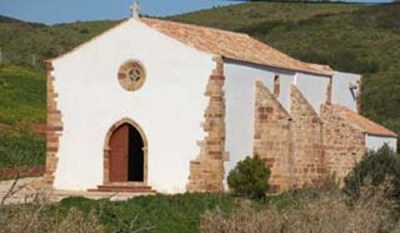
small village of Raposeira is the modest 13th Century Chapel of
Nossa Senhora de Guadalupe, reputed to have been used often by
Dom Afonso Henrique in his religious devotion.
The beaches immediately to the north of the Cape are more exposed to the
winds and rollers of the Atlantic with quite dangerous offshore currents.
Further to the north of Vila da Bispo is the open sandy beach of
Bordeira. About two-thirds of the journey north to this beach is a
turning left to the small village of Pedralva. The village was
virtually uninhabited and shows to the traveller a picture of what the
Algarve looked like prior to the invasion of tourism and how life was
once very demanding. At present there is a plan to reconstruct the many
ruins and turn into a type of tourist cultural attraction.
Sagres Weather (detailed)
Detailed Martinhal weather conditions
Detailed Sagres weather conditions
Detailed Tonel weather conditions
Sagres Photographs
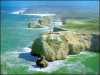
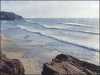
Cape St Vincent -
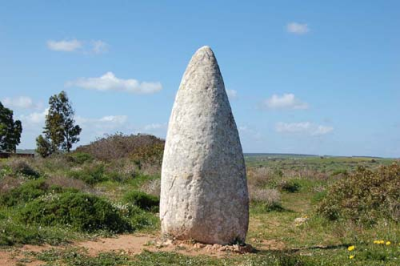
Rural Landscape -
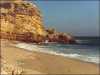
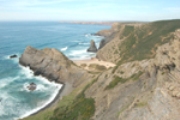
West Coast -
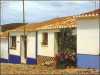
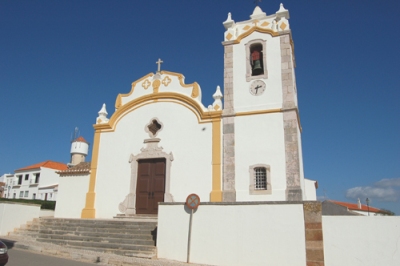
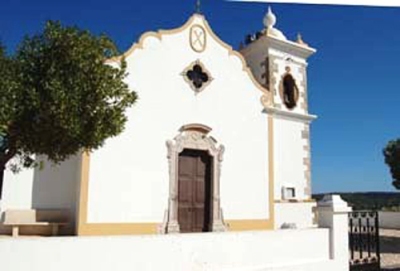
Houses in Vila do Bispo -
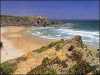
West Coast -
West Coast
|
Sagres Events |
--
|
| Festa de São Vicente (Vila de Bispo) |
22nd January
|
| Festa de Nossa Senhora de Encarnação |
24th March
|
| Festa de Nossa Senhora do Perpétua Socorro |
28th June
|
| Festa da Sagres |
13th to 15th August
|
| Festa do Banho |
29th August |
| Festa da Nossa
Senhora da Conceição |
8th December |
| Market Day |
1st Friday of each month
|
Algarve Towns
Albufeira
· Almancil
· Alvor
· Armação de Pera
· Carvoeiro
· Faro
· Lagoa
· Lagos
· Loulé
· Monchique
· Olhão
· Portimão
· Quarteira
· Quinta do Lago
· Silves
· Tavira
· Vale do Lobo
· Vilamoura
· Vila Real de Santo António
|



 Sagres Telephone Numbers
 8650
8650